A story of three pilsners: Czech, German, and American
November 15, 2023

New Distribution Center in The Greater Toronto Area now open!

November 15, 2023
From the dumping of bad beer comes great things. And in 1836 in Plzen, Bohemia (now the Czech Republic) that is exactly how the renowned and sought after Pilsners came to be. This is the story of three pilsner styles: Czech, German, and American.
The local townsfolk of Plzen were done putting up with a beverage that quite often had floaties in it, tasted like burnt grass, and was often contaminated with who knew what. Yes, they still wanted beer, but they wanted a beer that tasted good. A beer that was light and crisp, not heavy and dirty.
So the bad beer was dumped, and – long story short – new brewers were hired, a new brewery was constructed, and innovative brewing ideas were adopted.
Click here to learn more on the history of how Pilsners came to be.
Finally, a mere six years later, in 1842, the residents of Plzen were rewarded with the beer of which they had been dreaming. A golden, crisp, good tasting beer. The Bohemian Pilsner was born. And everyone wanted more.
While it seems like every beer country has their own variation of a Pilsner nowadays, these same countries still do their best to replicate the clean, crisp flavors of the original Pilsner. Today, Bohemian Pilsner is more often called Czech Pilsner. And like true crafters of beer, due both to terroir and creative styles, the Pilsner of the 1800s in Pilsen has evolved into several styles. A few of those more popular styles today, outside of the Czech Pilsner, are the German and American styles.
And while there are varying styles of Pilsners, one thing still holds true – pilsners are the perfect combination of a brewer’s artistic skills and scientific knowledge. Don’t take our word for it, listen to Jim Koch and Mitch Steele, instead.
“A Pilsner, when brewed right, is exquisitely balanced. This style’s key attributes – body, sweetness, bitterness and spiciness – are all going to be there in perfect harmony with no one flavor overwhelming the others. Pilsners represent the high art of brewing, and when they’re done right, are a masterpiece much like Mona Lisa’s smile.” (Jim Koch, founder and brewer at Boston Beer)
“They are the hardest style to brew, and it takes skill and experience to nail the correct flavor profile. I love Pilsners because they are the perfect example of the brewer’s art and skill. They are traditional, refreshing, nuanced and subtly complex.” (Mitch Steele, formerly with Stone Brewing and now co-founder and brewmaster of New Realm Brewing)
While brewers recognize that pilsners hold certain characteristics, there can still be differences in each style. So what makes a pilsner a Czech Pilsner vs an American Pilsner or a German Pilsner?
To grasp the many styles of today’s pilsner, you must first know more about the Czech Pilsner. Standing out from the darker beers of its time, Czech pilsners along with the other pilsner styles, feature a light hue, almost golden in color.
And while the pale malts play a substantial role in Czech pilsners, it’s really the ample amounts of Saaz hops that make it shine. Combine those with a bottom fermenting lager yeast and soft artesian water, and you’ve got the magic of a beautifully crafted Czech Pilsner, which tastes like sweet bread with its perfectly balanced malty characteristics.
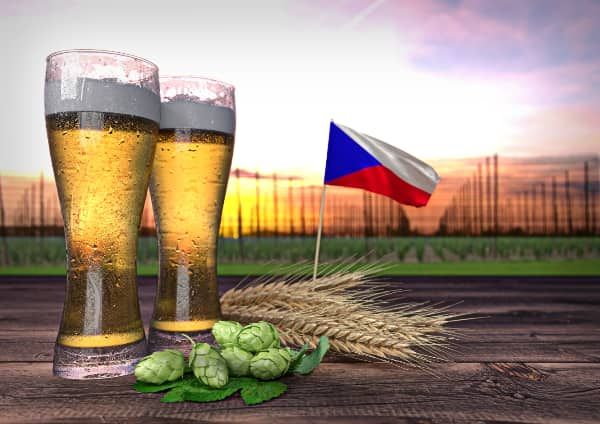
Thousands of years ago when the advent of beer was first discovered, transportation to and from different regions wasn’t easy. As a result, this newly discovered beer thing was unique to its own region. Fast forward a few thousand years to the mid 1800s and transportation allowed for a comingling of a variety of beer styles across regions and countries. So when the Bohemians crafted this pale, crisp beer, it was easy for others to get their hands on it. And they wanted more.
But new locations have different resources for brewing, and those resources have an impact on the original flavors, including the Bohemian Pilsners. In Germany, the water has high sulfate levels, and the hops used can often have a more amplified spice and herbal profile as compared to today’s Czech Republic with its soft water and Czech Saaz hops. Because of this, Germany’s version of the Pilsner isn’t as sweet as the original Bohemian Pilsner and also has an increased bitter flavor profile. These flavors are reminiscent of honey and biscuits with a lingering hop bitterness.
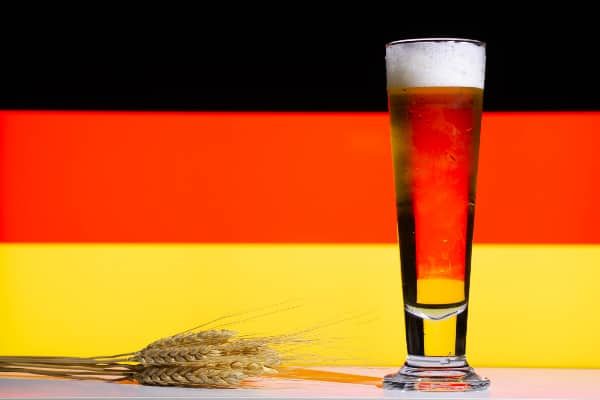
When Germans began immigrating to America, they brought their love of pilsners with them, including their recipes and yeast. But just like with the differences in brewing resources from Bohemia to Germany, there were differences with the available resources in America, as well.
But this time those differences were all about the barley. In Europe, traditional barley was two-row, but in America, it was six-row, giving a very different flavor profile than what German Pilsners had. Just like today, brewers of yesteryear were creative, so without skipping a beat, they realized that corn could be added to the grain bill to create a brew similar to their desired German Pilsners.
Then Prohibition hit, shuttering many breweries, never to open again. Those that did continued making this style of Pilsners using corn as a large part of their grain bill and these have dominated the American beer market for decades. Unfortunately, the muted flavors from these erroneously labeled Pilsners are far-flung from the original Bohemian Pilsner unveiled in 1842.
Enter the American craft brewers of today. Working diligently to honor the ingredients that crafted the original flavor profile of the beloved Czech Pilsners, they still manage to keep the creativity expected from the American craft beer scene. Most notably brewing with hops that are grown here, but are variants of the European noble hops, leaving the typical citrus hops of America to the IPAs. These American Pilsners are full of flavor, often with sweet, bready, and malty characteristics.
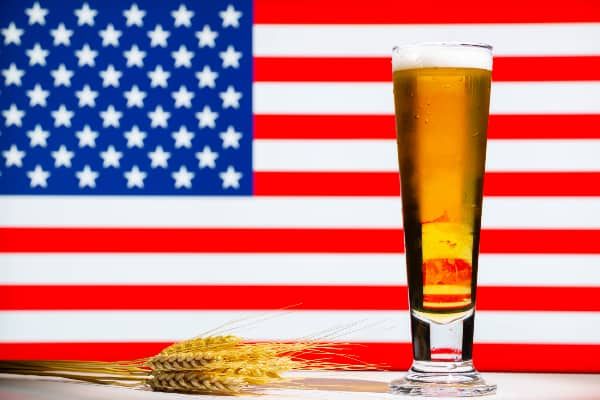
Being one of the most imitated beers on the market today, you might think that other countries are trying their way with Pilsners, too. And they are. Italy, France, and Belgium have jumped on this brewing wagon, with each brewery managing the difficult task of staying true to a style while being creative within their resources and craft. Who else will be jumping on? Because this brew wagon won’t be derailing anytime soon.
And when you’re ready to jump on the wagon, Mateurop (MMC) is ready for you. MMC has honed in their craft utilizing both science and art, so that you can do the same with your Pilsners and other styles. With advanced technologies and people that care about the malting process as much as you do about brewing your best Pilsner, MMC is the place to go for your Pilsner Malts, including Bavarian Pilsen, French Pilsen, (North American grown) Pilsen malts, and more.
Beer Connoisseur
Lower Case Brewing
CraftBeer.com
Beer and Brewing