Unique Fun Facts about Barley: Or is it Malts? Or Malted Barley?
August 22, 2023

New Distribution Center in The Greater Toronto Area now open!

August 22, 2023
Is it malt? Is it barley? Or is it malted barley?
We know you know the difference. We also know you understand how valuable barley is to the beer you brew and drink. But did you know that barley was once used as actual currency?
Can you imagine going into a car dealership with 15,000 pounds of barley in exchange for an SUV?
Ok, back in ancient Mesopatomain times you weren’t using barley to purchase cars, but still – the thought is quite entertaining.
Welcome to Malteurop Malting Company where you’ll not only get high quality malts alongside superior customer service, you’ll also get built-in barley trivia (trivial) facts to keep you and your customers entertained.
Take for example, the mere fact that the famous Roman historian, Pliny the Elder, stated that barley is the food for the gladiators because it gave them the high amounts of energy needed to be…well… gladiators. What a way for Russian River Brewing Company to capitalize on an ingenious name.
Want more useful (useless) barley trivia? We’ve got more. Prepare to be entertained. But make sure you’ve got a glass of malted barley (along with yeast, hops, and water) in front you.
Let’s start at the very beginning. Are malt and barley the same? No. But while malt and barley are not the same – malted barley and malt are the same, at least for our intents and purposes.
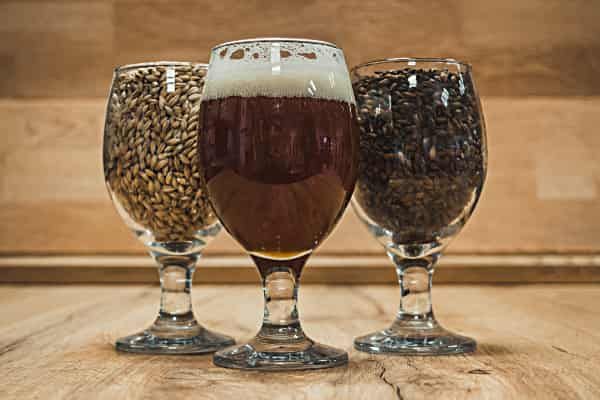
Barley is an agricultural product in the family of grasses. Hordeum vulgare, to be exact. Malt, also called malted barley, is processed barley. Meaning the barley goes to a malthouse where it is steeped, germinated, and then dried in a variety of ways to create the colors and flavors we expect from the liquid gold it imparts into our glasses.
_____
Interested in ancient malting practices? Click here to learn more.
_____
For brewing, there are two general types of barley: 2-row and 6-row. Which you already know. But did you know that 2-row is the primary type of barley used for malting and making beer in Europe due to its high sugar content? Six-row, which is protein rich, is really only used for animal feed. However, while most American brewers use mainly 2-row, 6-row barley is also still used for brewing in the U.S.
Now that we’ve got that settled, let’s get down to the real barley business with a few obscure facts about this well-loved grain.
Barley is old! Like 10,000 years old. It is believed to be one of the world’s oldest cultivated crops, beginning its domesticated journey in Southwest Asia.
Did you know that barley was used as a standard measurement tool? Yep. In early 14th century England, King Edward II standardized that three grains of dry barley placed together end to end equaled one inch. These were otherwise known as barleycorn units. This system of measurement was also the basis for the UK and US shoe sizes.
While we all like to think that barley is grown for the sole purpose of making the beers we love, over 25% of it is used for animal feed, with the remainder used for both food and malting purposes.
Barley is a cold-weather crop with a short growing season and is grown in more than 100 countries. The top 10 barley producing countries, which account for three quarters of the total global barley production, are: the Russian Federation, France, Germany, Ukraine, Canada, Australia, Spain, Turkey, UK, and the US.
Ever heard of malt vinegar? You got it! Barley is also used to make malt vinegar.
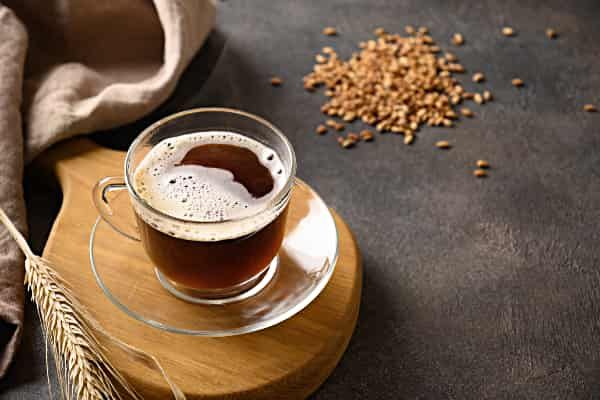
How about barley coffee? Not so common, right? However, in Italy during WWI and WWII, when coffee was no longer easy to access, roasted barley became a substitute. Not quite the coffee you would expect from Italy, but it has its benefits. No caffeine, for one. And for two, it’s stock full of nutrients, complex carbs, and antioxidants.
England recognizes the health benefits of barley, as well. In straw form. Barley straws have been shown to decrease unwanted algae growth in ponds, without any detrimental effects on plants and animals within those ponds.
Because barley is a cold weather crop, its roots grow deep into the soil protecting the plant from intense wind and rain. These deep roots also provide the land with natural erosion control.
Not only is barley great for erosion control, but also weed control. Barley’s height acts as a natural sun control, reducing weed growth in the process.
Okay, we all know that obscure fun facts about barley barely makes us experts on barley or malted barley. But one thing is for certain, Malteurop Malting Company is an expert.
From field to glass, MMC has compiled an innovative and expert team of farmers, maltsters, scientists, and craft sales representatives to get you access to superb quality malts. And you don’t have to be an expert to know that superb quality malts create superb quality beer and whiskey.
_____
“The difficulty, and also the fascination, of our maltsters’ craft is their ability to transform living, natural products that are variable by nature into a variety of standardized products that deliver highly consistent flavors, colors, aromas and performance. With our extensive knowledge of malting and meticulous formulation and testing, we deliver the highest quality, premium malts that match our brewers’ specifications consistently and reliably, time after time.” (Malteurop)
_____
Now those are facts worth knowing.
– – – – –
https://thinkbarley.com/2020/09/11/fun-facts-about-barley/
https://www.feedipedia.org/node/227
https://www.1000springsmill.com/barley
https://beef2live.com/story-us-barley-facts-0-212886