Why breweries should be talking more about malt
September 26, 2023

New Distribution Center in The Greater Toronto Area now open!

September 26, 2023
Today’s craft beer drinkers want to know everything about their beverage. So why aren’t we educating them on malt, one of beer’s biggest flavor drivers?
Let’s talk about malt. Let’s shout “MALT!” from the rooftops. Let’s put malt on cans, on menus, on tattoos!
Okay, maybe tattoos are going a bit too far… or are they? But seriously, why don’t we talk with consumers more regularly about the malts that are in the beer they’re drinking? The days are long gone when most folks can walk into a bar and just say “give me a beer.” There’s simply too much to choose from.
On the opposite end of the spectrum from the “give me a beer” days are today’s craft beer drinkers. These drinkers can be likened to wine connoisseurs, as there is a general thirst for knowing all about the nuance of the beverage in their hands and bellies.
Quite often, today’s beer drinker wants to know everything about the foamy liquid in their glass. But most of the time, we choose to tell them about hops. Probably because hops are more widely known for influencing intense flavor changes in a beer.
It’s almost a sport for even many casual drinkers to understand that Mandarina hops can impart a distinct tangerine flavor, while Nelson Sauvin imparts white wine/white grape characteristics, or that something as commonplace as Saaz provides the earthy, spicy, herbal notes in a Pilsner.
Even yeast – those microorganisms that are classified as part of the fungus kingdom – tends to get more love than malt. It’s not all that rare for a drinker to know that English yeast generally imparts fruity – typically apple or pear-like – flavors into a beer. Or that Belgian yeasts are known for creating dry, complex beers with fruity and spicy notes, and producing higher amounts of alcohol. Or yeast strains in wheat beers often add notes of banana and clove to the finished brew.
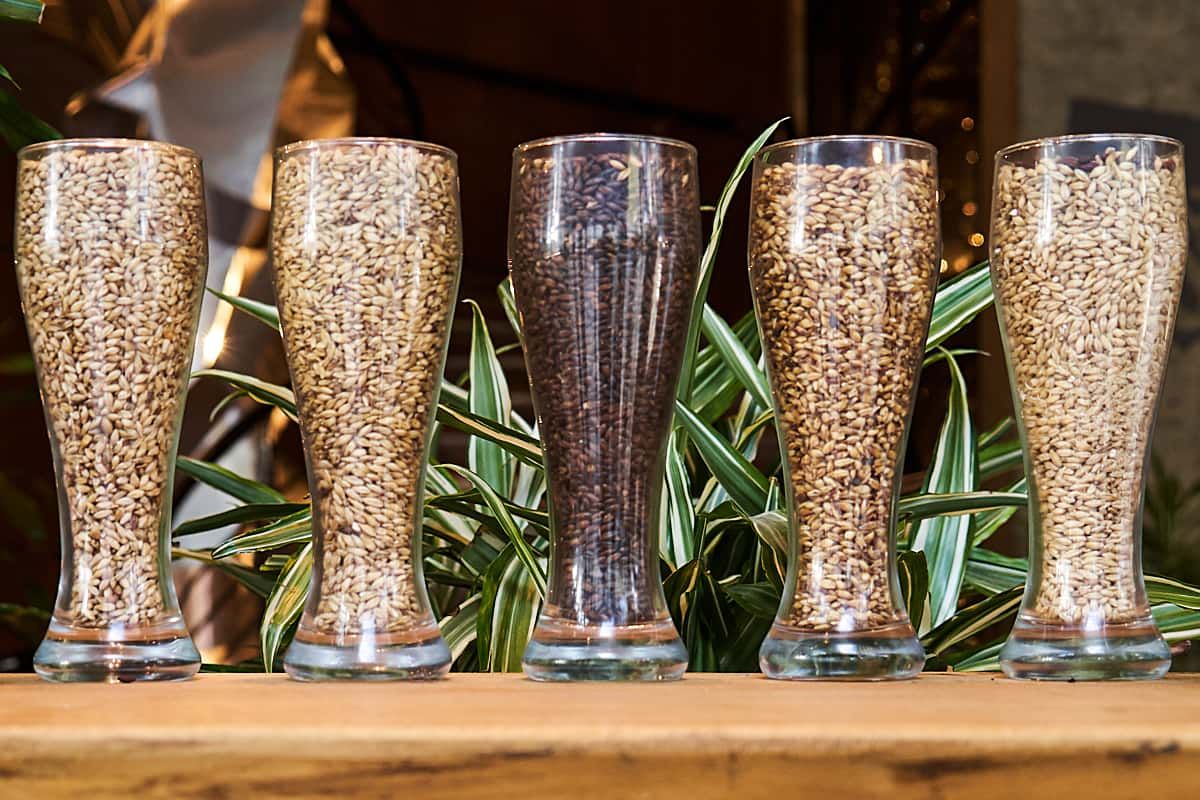
Yet, it isn’t all that common to talk about malt… but it should be.
Why wouldn’t a beer drinker note that Munich malts impart a bready or biscuity flavor, perhaps some light toffee notes, or even some hints of toast? Or that the malty sweetness in their American Amber Ale is caramel, toffee, or honey-like because of the crystal malts that frequent the style.
This is an opportunity for breweries, as malt is at the essence of beer. Whether it is used to create a rich, sweet, or bready tasting concoction or to provide a dance floor for the latest hop style or simply providing the necessary fermentables, we need malt.
It’s time that curious beer connoisseurs were afforded that opportunity to be as educated about malts as they are about hops and yeast.
In the word’s of MMC Mountain Craft Sales Manager Dustin Craft, “I think malt is kind of the next frontier… As people are kind of coming back to, I don’t want to say more traditional beers, but to that core of sometimes I just want a beer. I don’t want something super crazy.”
In no uncertain terms, the craft beer segment is maturing. There are more and more drinkers that have embedded themselves in the culture of craft for years, taking pride in knowing what makes a quality Pilsner just as much as they appreciate the new mind-bending styles that always seem to be right around the next corner.
The maturing craft beer sector is also forged from the efforts of brewers that have consistently honed their craft year after year, batch after batch. There is certainly a wide range here. Brewers that tweak the same recipe for years to dial it in to perfection and others that are constantly on the cutting edge of something new and everywhere, and everyone, in between.
As more drinkers crave the knowledge of everything beer, brewers and brewery staff that are as knowledgeable as ever have an opportunity to convert their craft drinkers into even more appreciative fans than they already are.
The number of breweries is still growing at a slowing pace, but shelf space isn’t. At the same time, ingredients, materials, and labor costs are all rising. And with shelf space coming only from a dogfight with distributors and other breweries, it is too costly for many small and mid-sized breweries to compete there.
Many breweries are shifting back to a more taproom centric and local draught distribution model, where they can control quality and maximize profits. That also means the opportunity is there to be more interactive with the customers walking through your door.
There are many ways to start educating customers about malt well beyond simply including them on a label or menu, though this is a perfect way to start. There are opportunities here to truly connect with your customers, holding personal events that build upon their appreciation for your beer.
On one hand, a more educated drinker can add to their appreciation for the traditional styles that you work hard to perfect. Building upon the knowledge that deepens their appreciation for what goes into a well-made Pilsner or Dunkel, they will then have an even better understanding of why the wildly complex or higher ABV offerings generally come with a higher price tag. More materials. More time. More labor.

Sold on the idea of “super fans” for your beer? Stay tuned for part two of our appreciation of malt, where we’ll delve into ways that you can present malts to your customers and ideas for giving them hands-on education on what malts do and how they shape the flavor of the beer.
– – – – –
Why breweries should be talking more about malt, part 1: The Introduction
Why breweries should be talking more about malt, part 2: The Foundations
Why breweries should be talking more about malt, part 3: Craft Beer Superfans
Premium grains from field to flavor.
– – – – –
Malteurop Malting Company (MMC) is based in North America—specializing in growing and producing quality malts for the beer, whiskey, and food processing industries. With local farms and Malthouses spread across the United States, Canada, and Mexico, Malteurop’s commitment to excellence is fully ingrained into every batch it produces, ensuring businesses of any size can create the finest beverages and food products on the planet.
Visit www.malteuropmaltingco.com to learn how we can support your malting needs.
Contact us at customersuccess@malteurop.com or (844) 546-MALT (6258) for questions or to place your order.
Malting is our passion. Quality is our promise.