Reinheitsgebot: fun facts about Germany’s beer purity law
April 3, 2024

New Distribution Center in The Greater Toronto Area now open!

April 3, 2024
Reinheitsgebot. As North American brewers, this probably isn’t the first thing you think about when it comes time to decide on a recipe for your next batch of beer. So what is the first thing you think about?
Is it the ease of access to the ingredients? The style? Something new and innovative or a flagship that everyone loves and expects? Or is it the German purity law?
Regardless of the first thing that comes to mind, you know that you need to start with high quality malts, hops, yeast, and water. Even if you include adjuncts, or take away one of the four, these ingredients are probably at the forefront of your decision-making factors.
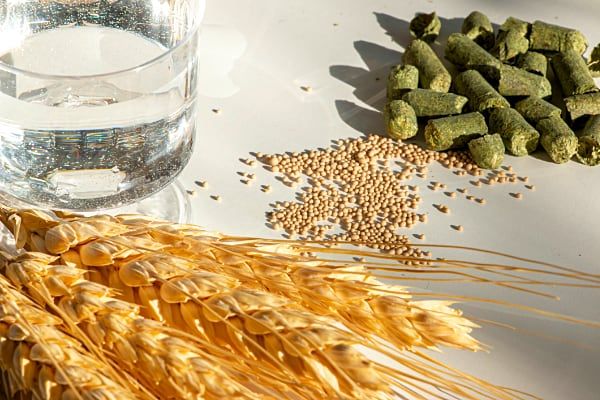
Rewind a few hundred years and transport yourself to Bavaria in the 16th century. Your decision-making process might just become a lot simpler.
The German Reinheitsgebot, or purity law (translated to mean purity order), came into effect in 1516. Why? Long story short, the Duke of Bavaria, Wilhelm IV, felt it necessary to dictate what brewers could use to brew beer: barley, hops, and water.
Wheat could not be used because it needed to be used for food instead. Adjuncts most definitely should not be used because these could create toxins and become hallucinogenic. Or so was said. Yeast, at that time, wasn’t even heard of.
Or was it.
Since yeast wasn’t included in the allowed ingredients, many assume it wasn’t known yet. Speculations from an article written in All About Beer, now posted in Beervana, included a statement from a 6th generation brewer from Schlenkerla in Germany, Matthias Trum.
Trum commented on how brewers in the 16th century couldn’t have not known about yeast. The term, maybe, wasn’t heard of yet, but the stuff was. And it was precisely that stuff – zeug, in German – that was consistently found at the bottom of the fermenters.
It’s easy to see how the Duke of Bavaria saw that “stuff” as simply being a part of the beer, not an additional ingredient. That stuff later became known as yeast. It also later became one of the four ingredients allowed when brewing using the German purity law called Reinheitsgebot.
So, if you were a brewer then and wanted to be able to sell your beer while still maintaining your freedom, you better follow suit and only brew with barley, water, and hops.
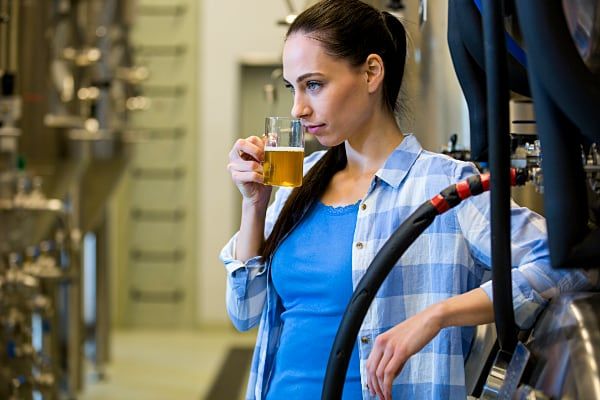
Though harsh penalties from not following the purity law are no longer in effect, some 500 or so years later, Reinheitsgebot has been expanded upon a bit, and is still in effect. In Germany, that is.
And today, all across the globe outside of Germany, many brewers strive to follow this strict regimen of crafting beers, even though there is nothing dictating that they do so. Why? Beer and breweries that follow Reinheitsgebot seemingly carry an elevated status equal to high quality, well-crafted beer. Many consumers think so, too.
While most German brewers still support the purity law today, there are more and more brewers fighting the status of it, citing limited creativity and innovation in their recipes.
A German brewer by the name of Johannes Heidenpeter told NPR that the purity law is restrictive and makes it difficult to be creative with his recipes. He says, “Why shouldn’t I include coriander or berries if they improve the taste? Plenty of countries with brewing traditions as old as Germany’s produce high-quality beer without the purity law.”
But other brewers argue that you can be creative within Reinheitsgebot by using a variety of hops and malts to create the flavors you need and want when brewing. And many brewers and consumers also argue that adhering to the purity law will keep German beer pure and true to its roots.
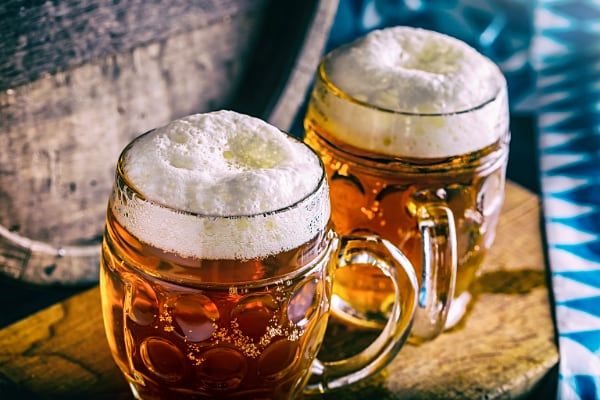
But not everything is clear when it comes to Reinheitsgebot, as evidenced by the “stuff.” For example, adding CO2 (carbon dioxide) that is not captured in the brewing process is not following Germany’s purity law. However, adding PVPP (polyvinylpolypyrrolidone), a clarifying agent, is allowable because ultimately it is removed throughout the brewing process.
What is clear when it comes to brewing, regardless of whether you’re following Reinheitsgebot or not, is the need for high quality ingredients, malts included.
So when it’s time to find the malts that help define your high-quality beer, we’ve got you covered. From seed to malt, our persistent focus on quality is made possible by our ability to control every step of the supply chain, including our Southeast Distribution Center based in Atlanta, Georgia.
Not only that, our innovative and passionate team are also consistently working at getting you high quality malts so you can create high quality beer – Reinheitsgebot or not.
And just like Reinheitsgebot, we never settle for anything less than perfect.
Premium grains from field to flavor.
– – – – –
Malteurop Malting Company (MMC) is based in North America—specializing in growing and producing quality malts for the beer, whiskey, and food processing industries. With local farms and Malthouses spread across the United States, Canada, and Mexico, Malteurop’s commitment to excellence is fully ingrained into every batch it produces, ensuring businesses of any size can create the finest beverages and food products on the planet.
Visit www.malteuropmaltingco.com to learn how we can support your malting needs.
Contact us at customersuccess@malteurop.com or (844) 546-MALT (6258) for questions or to place your order.
Malting is our passion. Quality is our promise.
– – – – –
https://www.beervanablog.com/beervana/2021/4/6/the-complex-half-millenium-story-of-reinheitsgebot