Brew Like a Girl: The history of alewives and their future collaborators
March 8, 2024

New Distribution Center in The Greater Toronto Area now open!

March 8, 2024
Every story has a history and the story behind women in brewing is no different. This is the story of the alewife. Of gender roles. Of pink boots. Of an international day for women. Of a collaborative brew day connecting it all together. This is a story of the history of women in brewing and how that history has shaped the women in brewing today.
As any good story should, this one, too, begins with a few questions.
Have you ever asked a male brewer what it’s like being a male brewer? Probably not.
Have you ever asked a female brewer what it’s like being a female brewer? Probably.
One more question.
Why are we talking about women in the brewing industry in the first place? It doesn’t matter a brewer’s identity. It only matters that they know how to brew.
Yet, in the 21st century, we continue to talk about women vs men.
Should this be a continued conversation?
Let’s back up a moment to gain some perspective on the history of brewing, specifically the history of women in brewing.
In 1800 BCE, “The Hymn to Ninkasi” was discovered. This is said to be the earliest documented brewing recipe, along with a song singing praises to the Sumerian beer goddess, Ninkasi. Back up even more to around 6000 BCE in Jiahu, China, where the oldest physical evidence of beer was found.
From Mesopotamia to China, from the Vikings to the Egyptians, from the Stone Age to now, humans have been consuming beer for thousands of years. And up until around the 14th and 15th centuries, the brewers were women.
Brewing was simply another day to day task. Women were able to make a beverage meant to stave off dehydration, all while adding much needed calories and nutrients in a time when food was scarce and water was less than safe.
But if she happened to have more than what was needed, she would sell it to others. But how would a passerby know that she had beer unless she went out to market it, taking her away from her familial duties? A broomstick or other stick with a garland attached to it near the door became a symbol that there was beer for sale in this house.
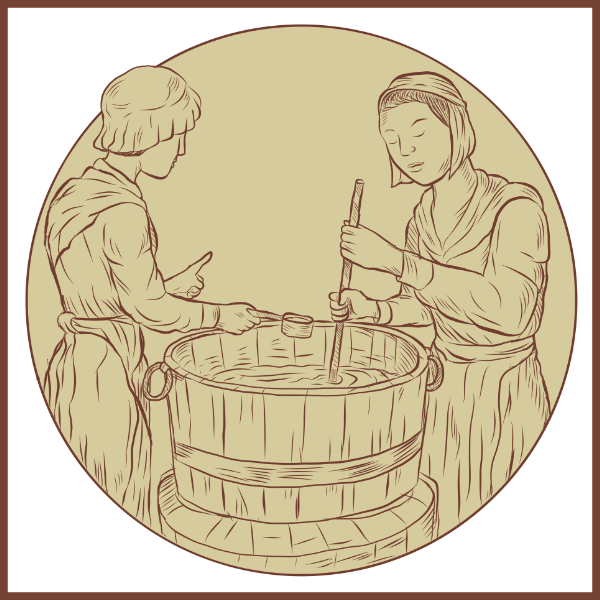
Not only did this allow for precious ingredients to not go to waste, but it provided a household with extra income and a common housewife with a possible side business.
That side business was an opportunity for independence and self-government in a time where women had little of either.
Women who had no families to care for or who had some time and extra ale after her family duties were taken care of could take this business even further – heading into the local markets hawking her ale. But during a time where marketing wasn’t as simple as creating a QR code, she had to get creative to be found.
A tall pointy hat would do the trick in a crowded market. But how to transport the ale? A cauldron, of course.
Are you starting to get an image in your head? But what about the cat? Oh, there were cats – they kept the mice out of the grains.
It’s easy to jump to the conclusion that these women – referred to as Alewives – were the emerging faces of what would later become known as witches, causing the woman’s downfall as a brewer.
But contrary to what makes a grand story, it wasn’t this tale that Alewives were early witches that caused the downfall of women brewmasters. More than likely it was the simple fact that brewing beer became big business offering profits and power.
As the market increased, alewives were pushed out and made to look increasingly like women of ill repute, no longer respected for their craft. In fact, in many communities around the 1500s, it was no longer legal for women to brew.
The once respected image of an alewife may have long since faded into the past, but their good standing reputation remains intact with the women in the brewing industry today. But what of today’s image of a brewer?
Personally, I’d like to see an image of ambiguity. Something along the lines of “the flavor doesn’t tell me the looks of the brewer”. Which brings us back to the question at the very beginning.
Why does this matter in the first place?
Because we are not there yet. While brewing is shifting to more women brewing the beers we love, the numbers of women owned breweries are still quite small.
Two percent actually, according to one of the most recent Brewers Association (BA) member surveys. That’s 160 out of 8,000 breweries when this was reported in 2019. More than half of the BA’s members’ breweries are owned by men alone.
Today, in the 2020’s, men make up around 76% of craft brewery owners, in a nation where women make up 51% of the population. That’s a significant shift from centuries ago when women were the sole brewmasters.
Interestingly enough, though, male drinkers under 25 are now outnumbered by female drinkers under 25. And consumers are increasingly BIPOC and female.
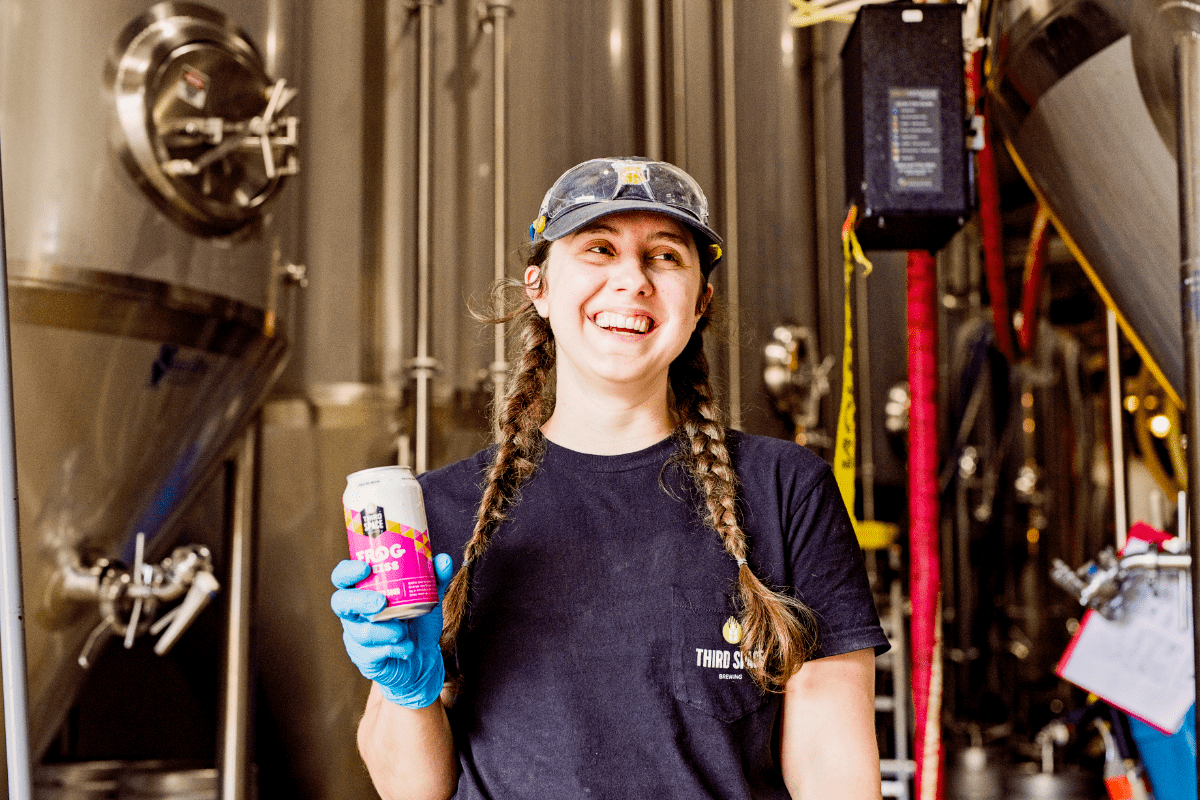
Women are making a strong comeback in the brewing industry. And it’s not just to brew beer for their family.
But one has to wonder: were alewives the original brewmasters because their gender defining roles dictated that?
Maybe so, but since the dawn of time, women have been stepping out of the traditional roles that have been defined for them. But has it really been since the dawn of time?
Where did these gender defining roles come from in the first place? DNA doesn’t instruct cells to be in the kitchen vs hunting. These stereotypes are modern day beliefs (in the scope of humanity), and may just be the factor that stops us all from seeing what history was once really like, where gender differences really didn’t matter.
Yes, it is widely believed that in prehistoric foraging societies, long before the agricultural period began, women were gatherers and men were hunters. But according to a recent study, as reported by the Smithsonian Magazine, women were just as skilled as men in hunting and participated in it just about as often.
In fact, it was found that women were actually more creative with a variety of tools and strategies for hunting than men were. They even taught others how to hunt. Another study, reported in Science Advances, found that up to 50 percent of early hunters were female. Gender seemed to have nothing to do with whether you were a hunter or not.
When did defining roles by gender begin if it wasn’t since the dawn of time? Experts say that it was right around the time when tribes found land that could sustain crops time and time again and the nomadic requirements to survive began to subside.
It may have been the rise of agriculturalism that caused the downfall of gender neutralism. In layman’s terms, people could accumulate resources – more stuff – resulting in a perceived need for power to protect that stuff – err, excuse me, resources.
“Cultivation gave men a comparative advantage relative to women and led to a division of labour in which men worked in the fields while women specialized in work in and around the home. This gender-based division of labour then gave rise to a culture which codified women’s place as being in the home.” (Alison Booth, Al-Jazeera)
Finding roots in agriculture may or may not have been the downfall for gender equality, but one thing’s for certain, those roots help to grow the barley and hops that we need for beer. And while a day set aside to celebrate women and nonbinary persons in brewing all across the globe may not have been needed hundreds of thousands of years ago, in a modern world where women often have been viewed as second class citizens, it’s a necessity.
And maybe that is why, the answer to the question, “Should we even be talking about women in brewing?” is a resounding yes. At least until we can get ourselves as a global society back to our roots – or lack thereof – of our pre-agricultural power hungry selves.
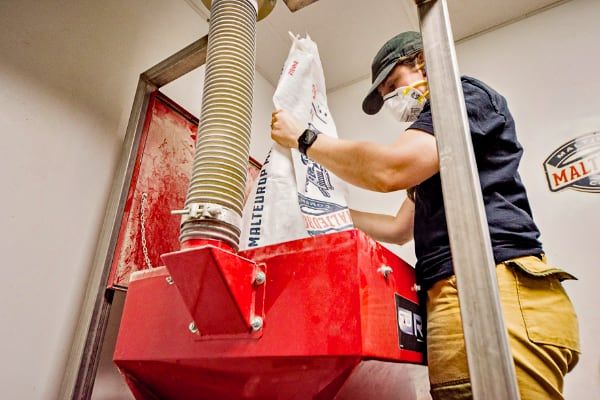
But until then, we have the camaraderie and collaborative partnerships of the Pinks Boots Society to keep all hues of boots on the brewing floor, roots connected all across the globe, and quality beer flowing for all.
Over the years, Teri Fahrendorf has over two decades as a master brewer and her brews have garnered much attention and awards.
Rewind back to 2007 when Fahrendorf embarked upon a road trip, brewing and blogging along the way, On a visit to Stone in San Diego, she met Laura Ulrich, Stone’s first female brewer who confided to Fahrendorf, “You’re telling me there are others like us?” (Beer and Brewing)
That was all it took. Fahrendorf made a commitment to list all of the women she knew in the industry and ultimately came up with 60 names. Posting those names online, Pink Boots Society was born – after her pink brewer’s boots, of course.
Joining up once again with Ulrich from Stone at CBC in San Diego, mere months after the initial online posting of names, twenty-two women joined forces to create what is now an official nonprofit with a mission to “assist, inspire and encourage women and non-binary individuals in the fermented/alcoholic beverage industry to advance their careers through education.” (Pink Boots Society)
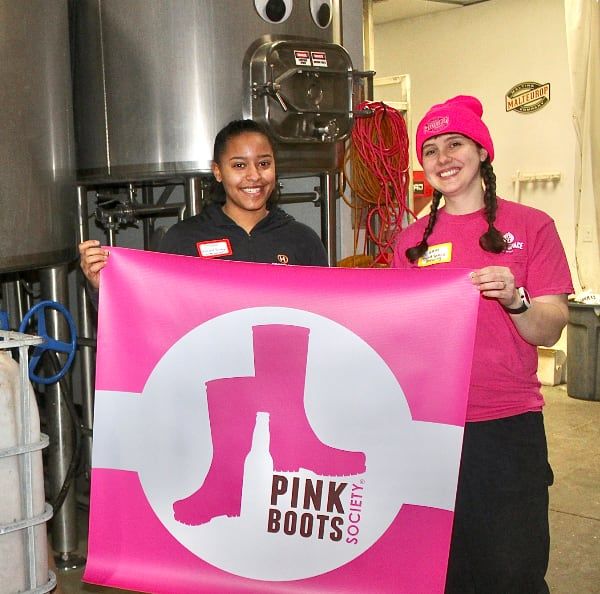
But what about those women that don’t brew? Should we also be paying attention to them? Of course. And that is where International Women’s Day comes into play.
“To celebrate women’s achievement. Raise awareness about discrimination. Take action to drive gender parity. International Women’s Day belongs to everyone, everywhere.” (IWD)
And this has held true since 1909 when America held its first National Woman’s Day. The world was soon to follow. In 1910, Copenhagen, Denmark, was host to an International Conference of Working Women. It was here amongst over 100 women from 17 countries that International Women’s Day was unanimously approved as an official event and celebrated officially for the first time in 1911.
Recognized by the United Nations in 1975, today, International Women’s Day on March 8, continues to be a driving force behind equality and inclusion for all.
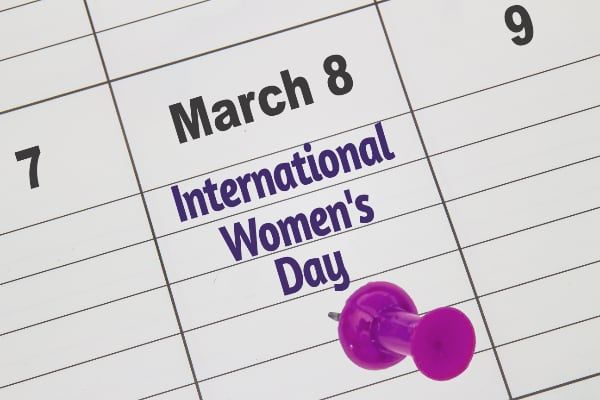
Which is why it makes sense that on March 8, Pink Boots Society, paying homage to women, nonbinary individuals and equity for all in the fermenting industry and beyond in honor of Internationals Women’s Day, also hosts the Pink Boots Collaboration Brew Day.
This worldwide event is a way for women and nonbinary individuals to support and learn from each other. All across the globe, supporting breweries and individuals gather together, pink boots donned, to brew their version of the recipe for that year.
But the camaraderie and collaborative skills don’t end there. Proceeds from the beer sales are used for continued education for Pink Boots scholarships to further promote, encourage, and assist women and nonbinary individuals in the brewing industry.
Anyone can participate in Pink Boots Collaboration Brew Day.
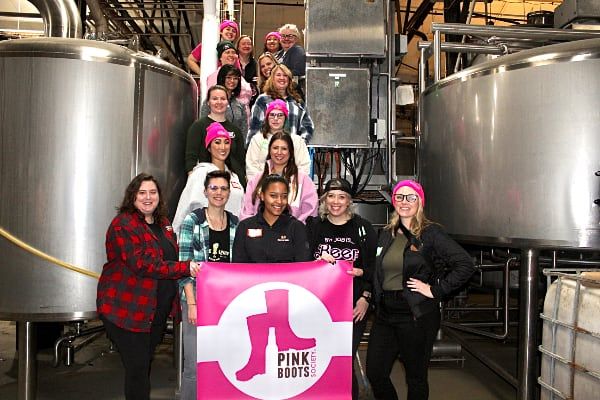
Samantha Danen and the rest of the team at Third Space Brewing in Milwaukee, Wisconsin, are just one example of the hundreds of breweries across the world participating in this epic collaborative brew day.
Aptly named, Like a Girl, Third Space’s Pink Boots Collab beer is brewed every year and is extremely special to Danen. After all, she created the recipe.
“Like a Girl recipe is really special to me. It’s a recipe I formulated. It has a sweet backbone to it but I do that so it balances really well with the Pink Boots hop blend. I shovel a lot of hops into that beer because I really want that blend to shine, and I love that the blend changes every year so the beer is never the same thing twice. Each batch is a little unique in its own way.”
And Malteurop Malting Company’s Pink Boots Society members along with its high quality Vienna Malt, help to craft this special collab brew.
But what makes this collab even more special to Danen and the others is the people that the brew day brings together.
“Members from all over the state come to Third Space and help us brew 60 barrels of this really awesome IPA. Not all of them are familiar with working in production, so it’s really cool for them to be able to see what it’s like to brew on a professional scale and then bring that educational aspect into it. It’s a powerful experience.”
For Danen the heart of Pink Boots Society is the connection she makes with the other women and members of Pink Boots.
“It just opens your eyes on another level as to how important it is to what we are doing. Bringing a light to the fact that there hasn’t been a place for women in the craft beer industry for quite awhile is really important. That’s what we do with these collab brew days. We try to bring light to the fact that there’s a place for women and beer. Women love beer and they do belong in this industry.”
Like a Girl is released annually in the taproom on March 8, in conjunction with International Women’s Day.
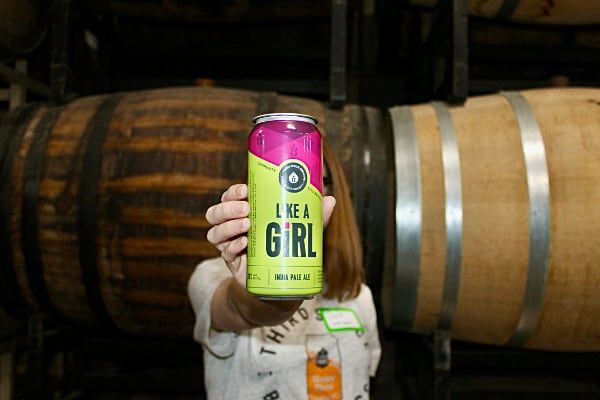
So, what do you think? Should we even be talking about women in brewing? If there’s a need to ask, then there’s a need for continued conversation. But Danen might just have a better way to approach the subject.
“What has your experience as a female in this industry been like? That might be the question I would ask.”
She leaves us with this, “We have a tendency of overcomplicating things when at the end of the day it’s such a simple thing. We make beer because it comforts people. It tastes good and it nourishes people. It really is a simple thing at the end of the day.”
Cheers to the simple things!
Malteurop Malting Company
Premium grains from field to flavor.
– – – – –
Malteurop Malting Company (MMC) is based in North America—specializing in growing and producing quality malts for the beer, whiskey, and food processing industries. With local farms and Malthouses spread across the United States, Canada, and Mexico, Malteurop’s commitment to excellence is fully ingrained into every batch it produces, ensuring businesses of any size can create the finest beverages and food products on the planet.
Visit www.malteuropmaltingco.com to learn how we can support your malting needs.
Contact us at customersuccess@malteurop.com or (844) 546-MALT (6258) for questions or to place your order.
Malting is our passion. Quality is our promise.
– – – – –
https://museumofoxford.org/alewives-in-oxford-a-history-of-female-brewing
https://womenintheology.org/2016/07/18/alewives-brewing-ale-brewing-controversy/
https://braciatrix.com/2017/08/07/witchcraft-alewives-and-economics/
https://beerandbrewing.com/replanting-the-seeds-of-brewing/
https://beerandbrewing.com/how-women-brewsters-saved-the-world/
https://www.brewersassociation.org/insights/new-owner-demographic-benchmarking-data/
https://www.shondaland.com/live/money/a45469137/the-wonderful-world-of-women-brewers/
https://www.pinkbootssociety.org/
https://www.internationalwomensday.com/
https://www.science.org/doi/10.1126/sciadv.abd0310
https://www.theguardian.com/science/2015/may/14/early-men-women-equal-scientists
https://www.aljazeera.com/opinions/2013/4/11/the-origins-of-our-gender-roles
https://thirdspacebrewing.com/press/4th-annual-like-a-girl-brew-day/
Third Space Brewing, Sam Danen, Production Manager, Beer School Presentation (2023) and Interview (2024)