English porters beget Irish stouts: a beer styles by region series
November 7, 2024

New Distribution Center in The Greater Toronto Area now open!

November 7, 2024
Culture encompasses all aspects of a society, including England’s porters and Ireland’s stouts. From the natural land to the learned behaviors of its inhabitants, culture formulates our spiritual, natural, and physical selves.
It makes sense then that different cultures and regions of the world, alongside distinct beliefs and values, there would also be distinct flavors. And many of those flavors reside in beer.
Ireland is known for its cities and landscapes from Dublin to Cork to Galway and all the rolling hills and quaint villages in between. Here, you’ll find thousands of years of history from castles to churches to cliffs and crashing waves. Ireland is more than an island of its inhabitants of eight million people; it’s a story with pages upon pages to be turned. And within those pages lies its beer… more specifically, its stouts.

But those stouts did not originate in Ireland. Welcome to England, home to 58 million people and a land we know for its cask ales, fish and chips, and London, of course. You’ll revel in the beauty of its natural landscapes of rugged coastline, small market towns, and royal history. But England is more than that. It has porters!
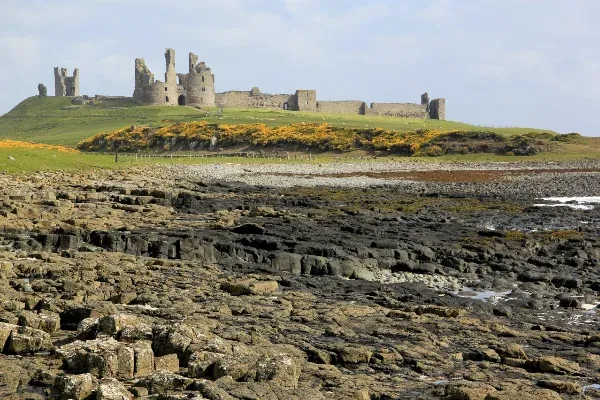
Porters, as in delivery boys, similar to modern-day couriers or delivery drivers. These hard working young men ruled the ports and streets of London as they delivered goods to and fro in the 1700s.
The beer consumed right around this time was more of a brown beer. Heading into a pub, one might order either a stale or a mild when choosing which type of brown beer they prefer. The mild was the fresher and sweeter of the two.
The stale was not as sweet as it was an older version of the fresher one. While there were other styles available, an amber, and even a stout, for example, it was believed that most consumers then preferred a mixture of these beers, and not just one style.
As for the stout beers that were available, they were called such not because of the style, but because they were stout. Any type of ale could be stout. It simply meant that it was a stronger beer. For example, the Russian Imperial Stout is aptly named because of its high ABV – around 9 or 10 percent, if not more – and because London brewers brewed this stout beer specifically for Russian royalty.
But most brown beers in the early 18th century eventually became known as porters because it was the porters that reportedly consumed this style the most.
With its popularity combined with the timing of the Industrial Revolution, porters were some of the first mass-produced beers of their time, aging for around six months in wooden tuns of epic proportions upwards of five million pints of porter. And they were strong, clocking in around seven percent with a funky and hop-forward flavor profile due to the British yeast used and being heavily hopped.
Hard working porters needed strong beer and a lot of it.
But as so often happens, taxes increased. And during the 1700s, the higher the alcohol in beer, the higher the taxes on said beer. So in the early 19th century, the ABV dropped to around five percent.
Consumer tastes began to change, as well. People were more inclined to order the mild, rather than the aged stale version of the porter. Less tart, more bitter, and increased sweetness had more of a draw as different beers such as the pale ale became known and increased in popularity.
The stronger beers that were still liked, known as stout porters, became simply known as stouts. Porter was on its way out.
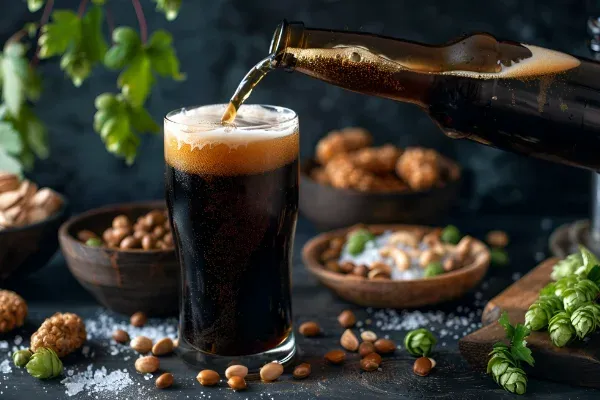
Stouts found their way in.
Porters were made during a time when roasting malts was a highly inconsistent process, resulting in the robust dark beer that was consumed mostly by the porters of London.
As London breweries grew, expanding into Ireland, and brewing processes and recipes shifted with the times, the porters of England slowly transitioned into the stouts of Ireland. Ultimately finding its way into the hands of a gentleman by the name of Arthur Guinness.
In 1759, Guinness leased a then defunct brewery and its four-acre space to start brewing his style of the beer that was once known as a porter. Signing a 9,000-year lease at St. James’s Gate Brewery, one has to wonder what Guinness foresaw in his future. It must have been a bright one, indeed.
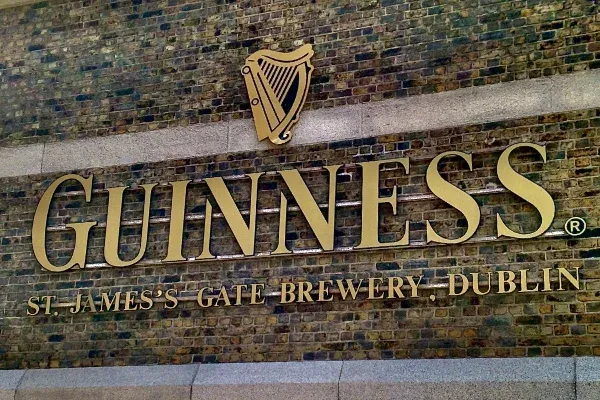
Stout may have started as a descriptor for the strength of a beer, but over time, this word transitioned from its original meaning of stronger beer to a style all its own. One with a focus on darker malts and roasted barley.
This new style of porters had more of a coffee-like flavor with a touch of caramel and sweetness from the malts. Modern-day Irish stouts are often a nitro-pour when served on draught giving it an added creamy texture.
While many people think of an Irish stout as a Guinness or something similar to Guinness, different regions in Ireland may have slight variations. For example, stouts brewed in the Cork area are often sweeter with chocolate flavors coming from the use of specialty malts.
Regardless of the nuances, Ireland has fully embraced the stout as its beer. Along with the rest of the world.
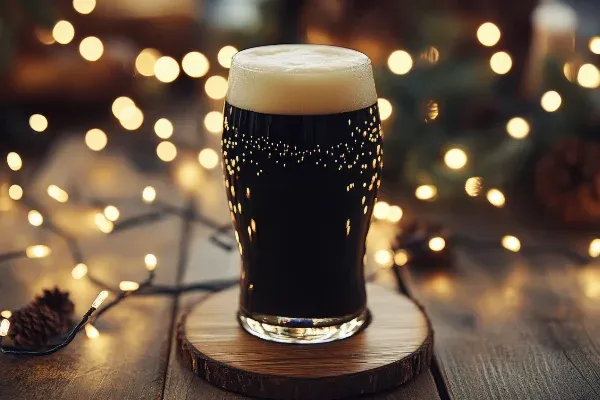
It’s the malts that define a beer style. Porters were brewed before malting was a refined process, and a cheap brown malt was usually used. This resulted in dark brown colors and strong beers. Which was exactly what people expected and wanted in the 18th century.
But as the Industrial Revolution took hold and malting processes became more refined, people began to expect quality from their beers, not just high alcohol content. This was especially true when British engineer and inventor Daniel Wheeler invented the drum kiln in 1817.
By then, the Irish had already been brewing the Guinness style of stout and working to make it their style. Now with this invention, they were able to use a more refined quality-controlled malt, the black patent malt. This malt gave the beer a roasty, less sweet flavor profile, leaving the prevalent sweet chocolatey profile to the porters of the past.
Sixty-some years later, The Free Mash Tun Act of 1880 came into play further differentiating the English porters from the Irish stouts. This act took away the requirement that the grist could only contain malts. Now it could also include sugars and unmalted roasted barley. The Irish stout had found its identity.
Those porters of the past, however, didn’t stay in the past for long. In the early 1980s, American brewers brought them back from the dead, eager to put their spin on the style. Often adding adjuncts like peanut butter, chocolate, and yes, the love-it-or-hate-it pumpkin.
Today, you can find a variety of flavored porters alongside stouts. But stouts are not immune to creative adjuncts either. You’ll find pumpkin stouts, sweet potato stouts, mint stouts, and anything your mind can grasp, at least in the U.S.
Today, the two styles are intermingled and are often not true to style. So much so that the BJCP (Beer Judge Certification Program) places American Porters and American Stouts under one category with two subsets.
“These beers all evolved from their English namesakes to be wholly transformed by American craft brewers. Generally, these styles are bigger, stronger, more roast-forward, and more hop-centric than their traditional Anglo cousins. These styles are grouped together due to a similar shared history and flavor profile.”
On the other hand, the Irish Stout and the English Porter have distinct descriptions.
The BJCP defines the Irish stout as “a black beer with a pronounced roasted flavor, often similar to coffee. The balance can range from fairly even to quite bitter, with the more balanced versions having a little malty sweetness and the bitter versions being quite dry. Draught versions typically are creamy from a nitro pour, but bottled versions will not have this dispense-derived character.”
You’ll also find categories for Irish Extra Stout, Sweet Stout, Oatmeal Stout, Tropical Stout, Foreign Export Stout, and more.
The English porter is defined through the BJCP as “a moderate-strength dark brown English ale with a restrained roasty, bitter character. May have a range of roasted flavors, generally without burnt qualities, and often has a malty chocolate and caramel profile.”
Today, brewers experiment with all types of malts in each style, so you might be hard-pressed to find a historically true porter or stout. But you won’t be hard pressed to find a good one.
There’s something to be said about creativity, but there’s also something to be said about tradition.
The Irish have done well staying true to their Irish stouts. They are dry, with a hint of sweetness, dark, and easy-drinking beers. But we must remember where these stouts originated from – the brewmasters of England. And maybe even more so, we must pay homage to the porters. For it was their hard working skills that required a beer stout enough to quench their thirst.
Premium grains from field to flavor.
– – – – –
Malteurop Malting Company (MMC) is based in North America—specializing in growing and producing quality malts for the beer, whiskey, and food processing industries. With local farms and Malthouses spread across the United States, Canada, and Mexico, Malteurop’s commitment to excellence is fully ingrained into every batch it produces, ensuring businesses of any size can create the finest beverages and food products on the planet.
Visit www.malteuropmaltingco.com to learn how we can support your malting needs.
Contact us at customersuccess@malteurop.com or (844) 546-MALT (6258) for questions or to place your order.
Malting is our passion. Quality is our promise.
– – – – –
https://beerandbrewing.com/style-school-the-ballad-of-the-irish-stout/
https://brewhoppin.com/2020/09/history-of-stouts/
https://www.taptrail.com/why-the-stout-belongs-to-ireland/
https://mckennas.guides.ie/blog/history-beer-ireland
https://www.australianhomebrewing.com.au/learn/beer/origins-of-stout-beer-styles/
https://www.beerwulf.com/en-gb/articles-about-craft-beer/porter–stout
https://www.guinness.com/en/our-craft/guinness-story
https://beerandbrewing.com/dictionary/QPuJzcZGJq/
https://www.bjcp.org/style/2021/15/15B/irish-stout/
https://www.bjcp.org/style/2021/13/13C/english-porter/
https://www.bjcp.org/style/2021/20/american-porter-and-stout/